
A military preparing for disruption
A military base can have aircraft, ammunition and trained crews, yet still depend on a civilian substation outside its fence. A force can plan a short bombing campaign and still need procedures for a war in which casualties cannot be flown home. The gap between the operation leaders promise and the conditions planners prepare for is worth examining.
Ian Wendt’s 3 November video puts several developments together: Senator Chris Murphy’s warning about Iran, a Pentagon resilience initiative, an Army burial exercise and Tucker Carlson’s allegation about a possible nuclear strike. The result is an alarming story. The question is whether the evidence establishes the connections the story invites us to make.
Our reading is that the documented material supports scrutiny of escalation and preparedness. It does not establish that a nuclear strike has been approved, that a domestic blackout is scheduled, or that a senator’s medical emergency was caused by his criticism. There is enough in the public record to ask difficult questions without treating those additional claims as settled.
What Murphy actually put on the record
In remarks published by his office on 29 October, Murphy described a briefing about possible renewed military operations against Iran. He characterised the plan as “insane” and warned that it could worsen the conflict and compromise the rule of law. He also referred to reporting about potential civilian-infrastructure targets. Those are his assessments, informed by a briefing whose full contents are not public. His released remarks do not identify a nuclear weapon as the chosen instrument.
A senator’s account should prompt oversight: what objective is the proposed operation meant to achieve, what assumptions underpin it, and what happens if the opponent refuses to comply? A public warning cannot substitute for the answers. Nor does an alarming description, on its own, disclose a classified target list or an authorisation.
Why the Pentagon wants bases to stand alone
FORTRESS America is a real initiative announced by Pete Hegseth. The Army’s account describes an ambition to make installations more independent, including generating their own power. Fox News, citing documents it reviewed and Pentagon spokesperson Sean Parnell, reports a goal of at least 90 days of independent essential operations for major installations in the continental United States. It covers the support a base needs to keep functioning, including electricity, water, fuel and communications.
The distinction between a goal and an existing capability matters. Air & Space Forces Magazine reported on 20 October that officials were still assessing installations and costs, with some parts of the programme potentially taking years. The announcement is not evidence that every base is already self-sufficient.
There is also a longer history here. In February 2024, CISA, the NSA and the FBI assessed that Chinese state-sponsored actors were positioning themselves within US critical infrastructure for possible disruption during a crisis or conflict. That advisory predates the present viral video. It provides a documented reason for resilience planning without establishing when, where or whether an attack will happen.
The political question is still uncomfortable. If officials judge dependence on civilian systems to be a military vulnerability, what equivalent protection exists for the people who use those systems every day? A powered command centre and a functioning community are different measures of preparedness.
The burial exercise is real. Its purpose matters.
The Army’s own account of Operation Dragon Covenant describes a Fort Bragg exercise testing temporary battlefield interment. Engineers used simulated skeletal models and water containers to check whether burial and excavation procedures could preserve remains for later identification and repatriation. The exercise addresses a grim problem in high-intensity warfare: the normal evacuation system may not be available. The published account does not identify a planned nuclear attack on Iran as its cause.
Treating the photographs as meaningless would miss what planners are preparing to manage. Treating them as a forecast of a specific catastrophe goes beyond what the source says. They are evidence of a contingency being rehearsed; the political decision to bring that contingency about is a separate question.
Where the nuclear allegation outruns the evidence
Carlson’s post alleges that Netanyahu is pressing Trump toward a possible nuclear strike against an underground Iranian site and suggests an early-November decision window. Wendt reads that allegation and presents other developments as confirmation. We could not independently verify the alleged nuclear plan. Multiple stories repeating Carlson’s account do not, by themselves, provide multiple independent sources for it.
The short Trump–Netanyahu exchange included in Wendt’s video contains general language about completing their work together. It does not explicitly identify a nuclear weapon. An argument that a deeply buried target would be difficult to destroy is also not proof that a nuclear attack is the only available policy. Leaders can change the objective, negotiate, contain a threat or decline an operation. Whether any alternative succeeds requires its own evidence.
The video also draws attention to Murphy’s subsequent stroke. His 6 November statement reports a small brain bleed and his move from hospital to rehabilitation. We found no evidence connecting the medical event to his public remarks. The timing alone does not establish interference or retaliation.
The update since the clip was posted
On 6 November, Trump said US forces had conducted limited strikes against an Iranian air-defence system, according to Associated Press reporting. On 7 November, Reuters reported that Qatar said mediation between Washington and Tehran was continuing and rejected claims that the efforts had failed. Military activity and a diplomatic channel were therefore continuing alongside one another at the time of this review.
Qatar’s foreign ministry had already described efforts to exchange proposals and narrow differences on 3 November. That is a material part of the picture. A successful settlement is not assured; neither is an inevitable march through every rung of escalation. Decisions by several governments still matter.
The line that would change the stakes
A nuclear weapon would introduce consequences far beyond the immediate military target. The International Committee of the Red Cross warns of cross-border effects, severe long-term harm, inadequate humanitarian response capacity and the risk of further escalation. Those warnings make the allegation important to investigate. They do not validate a specific strike scenario or prove that world war would automatically follow.
The strongest question is about accountability before a decision becomes irreversible. What is the objective? What evidence supports the chosen means? What limits apply? What would count as success? And what is the response if Iran retaliates rather than concedes? A promise that an operation will be brief answers none of those questions.
For Watch This Space, connecting the dots means making the connection itself earn its place. Watch the public authorisations, changes in declared objectives, independently corroborated military developments and the progress of mediation. Those are more useful indicators than a viral deadline.
Before another leader promises a short strike, ask them for the stopping point. The people who order escalation are rarely the only people who pay for it.
Watch the film
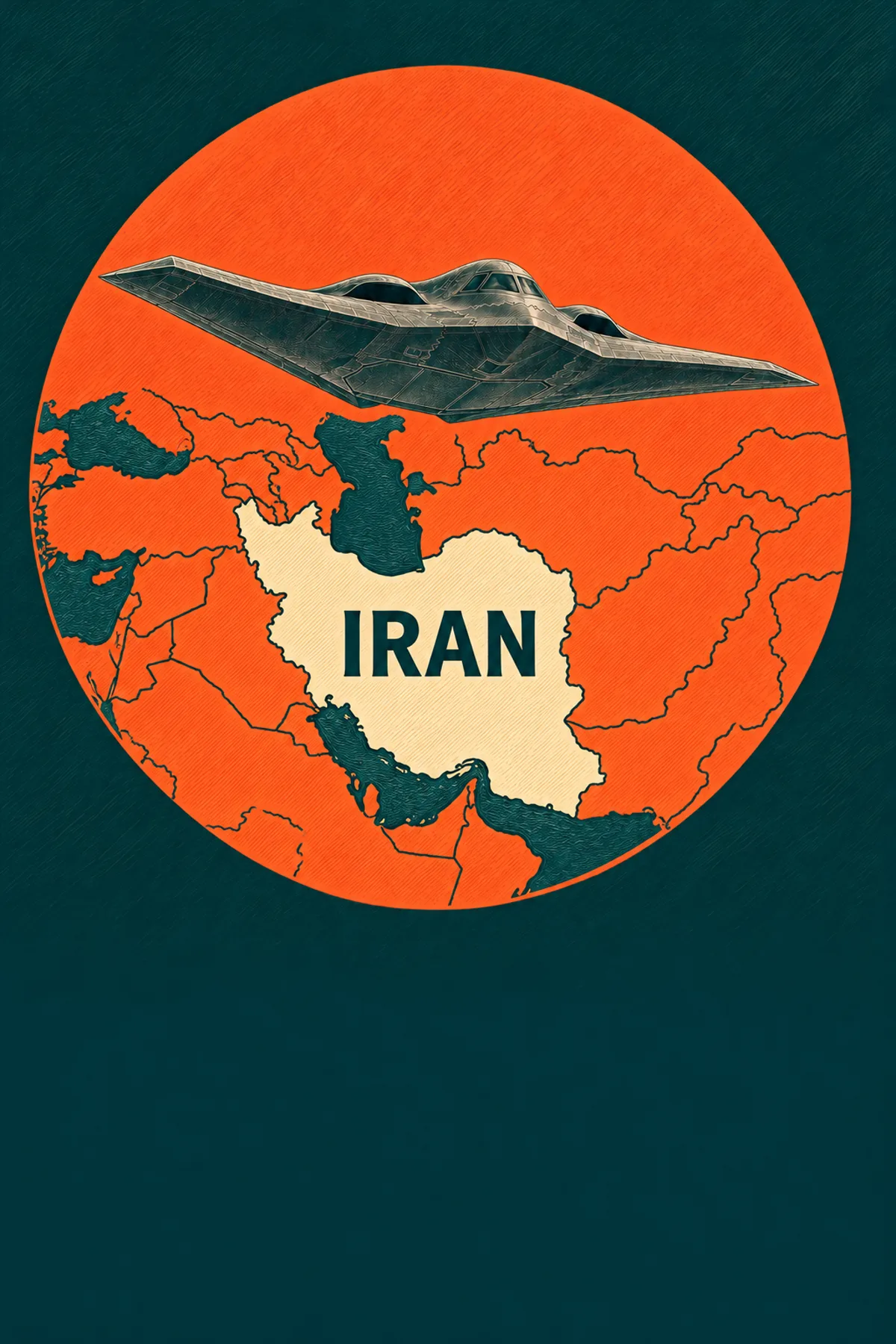
English captions available in the player. Artwork is illustrative.
Sources & further reading 14 links
- Ian Wendt — supplied Facebook video, 3 November
- Murphy’s office — published Middle East Institute remarks, 29 October
- US Army — Hegseth’s FORTRESS announcement
- Fox News — FORTRESS documents and Pentagon spokesperson
- Air & Space Forces — programme scope and implementation, 20 October
- CISA, NSA and FBI — critical-infrastructure advisory, February 2024
- US Army / DVIDS — Operation Dragon Covenant, 22 October
- Tucker Carlson — original allegation on X
- AS — report reproducing and linking Carlson’s allegation, 2 November
- Murphy’s office — hospital discharge statement, 6 November
- Associated Press — limited US strikes, 6 November
- Reuters — Qatar says mediation continues, 7 November
- Qatar foreign ministry — exchange of proposals, 3 November
- ICRC — nuclear weapons and humanitarian consequences
Source material and reporting are dated. This archive preserves the original editorial work; it is not a live news feed.
Our editorial approach